Cat Letter A: A Designer’s Stitch-Out Review
As an embroidery designer who constantly evaluates digital assets for both personal projects and commercial product lines, I approach every new machine embroidery design with a critical eye. It is not enough for a graphic to look charming on a screen; it must translate into thread without puckering, breaking, or losing its character. When I first loaded the Cat Letter A embroidery file into my software, I was immediately struck by its potential for the upcoming Back To School season. However, before listing any finished product in my shop or stitching it onto a client’s gift, I needed to understand how this specific alphabet motif behaves under the needle.
First Impressions and Visual Personality
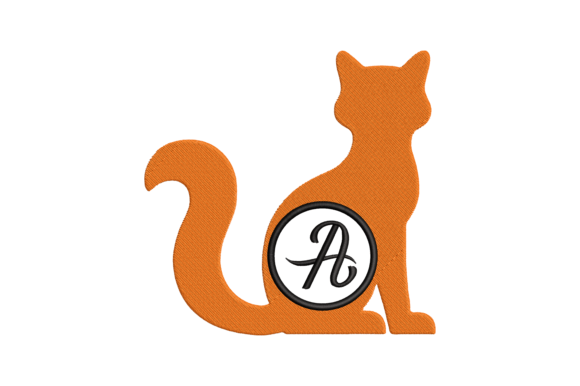
The initial appeal of Cat Letter A lies in its balance between whimsy and structure. For those of us creating custom apparel or nursery decor, the letterform needs to be legible while still conveying that adorable charm mentioned in the product description. In my review, the silhouette feels organic rather than rigid. The integration of the feline shape into the letter 'A' creates a natural focal point that draws the eye without overwhelming the garment. This is crucial for Etsy sellers and small shop product creators who need designs that photograph well in printable mockups and translate effectively to physical items. The mood is undeniably sweet, making it a strong contender for baby embroidery projects, personalized backpacks, and teacher appreciation gifts.
Real-World Application: The Custom Sweatshirt Test
To truly evaluate this design, I envisioned a real-life scenario relevant to current market trends: a custom embroidered sweatshirt for a kindergartner’s first day of school. This is a high-stakes embroidery project because the fabric is thick, the customer expects durability, and the aesthetic must be photo-ready. When planning this application, I considered how Cat Letter A would sit on French terry fleece. The design’s intricate details suggest it has enough substance to stand up against the texture of sweatshirt material, but this also demands careful attention to stabilizer choice. A cut-away stabilizer would be non-negotiable here to prevent the letter from sinking into the pile or distorting during wear.
For craft business owners targeting the Back To School niche, this design offers versatility beyond apparel. I can easily see this working as a centerpiece on a canvas tote bag design or as a monogram alternative on a lunchbox cozy. However, when moving from fleece to woven cotton or linen, the behavior changes. On smoother fabrics, the stitch density becomes more apparent. If you are producing commercial embroidery items like tea towels or aprons, you must verify that the fill areas are not so dense that they create a bulletproof patch effect, which can cause needle breaks or fabric tearing.
Navigating Fabric Challenges and Hoop Limitations
While Cat Letter A is versatile, my experience tells me there are specific environments where caution is required. If you are working with small hoop size constraints, such as 4x4 hoops commonly used for baby onesies or pocket logos, you must check the actual dimensions of the file before purchasing. Scaling down an intricate design often results in lost detail or overlapping stitches that cause thread bunching. Always confirm the native size matches your intended application.
Textured and stretchy fabrics present another hurdle. When testing this type of illustrative alphabet on ribbed knits or pique polos, the interaction between the satin stitch outlines and the fabric grain is critical. If the satin columns are too narrow, they may disappear into the weave; if they are too wide, they risk looping. For apparel decorators, I recommend running a test stitch-out on a scrap of the exact fabric you intend to use. Do not assume a setting that worked for a pillow cover will work for a stretchy t-shirt. Additionally, dark fabrics require high contrast thread colors to make the intricate details pop. A tone-on-tone approach might look sophisticated in a digital embroidery file preview, but in reality, the cat features could get lost against a navy or charcoal background unless you adjust the thread palette for visibility.
Technical Considerations for Professional Results
Whether you are a hobbyist or a professional handmade product creator, technical diligence separates amateur work from boutique quality. Here are practical notes based on reviewing similar illustrative alphabets:
- Verify Stitch Types: Inspect whether the design uses primarily fill stitch or running stitch for internal details. Running stitches add charm but can snag on rough surfaces like denim or canvas tote bags.
- Check Registration: Intricate details mean multiple color changes or stop points. Ensure your machine’s registration is calibrated so the cat’s facial features align perfectly with the letter outline.
- Stabilizer Strategy: For lightweight fabrics like quilting cotton or voile, use a tear-away or wash-away stabilizer to avoid stiffness. For heavy outerwear, a sturdy cut-away is essential.
- Mockup Accuracy: When creating listings for design assets or finished goods, use realistic textures in your printable mockup. Flat vector previews can mislead customers about how the applique design or stitch texture actually looks.
- Licensing Compliance: Before selling any item featuring Cat Letter A, explicitly confirm the license terms. Some files allow for finished product sales but prohibit sharing the digital file or using it for mass production.
Impact on Product Value and Customer Trust
Ultimately, the decision to use Cat Letter A should be driven by how it enhances the perceived value of your work. In the competitive world of personalized gift items and Etsy listings, customers are looking for uniqueness paired with professionalism. A well-executed stitch-out of this design signals that you care about the intersection of art and craft. The "adorable charm" promised in the description only delivers if the execution is flawless. Poor tension, mismatched threads, or inappropriate placement can turn a cute concept into a disappointing holiday embroidery gift.
For creative entrepreneurs, this design serves as a strong anchor for seasonal collections. It bridges the gap between generic block letters and overly complex illustrations, making it accessible for a wide demographic. Whether you are branding a boutique line of children's wear or creating a one-off embroidered patch for a local event, Cat Letter A provides a distinct visual identity. Just remember that your reputation rests on the final tactile result. Take the time to test, adjust, and validate the design against your specific materials and equipment. By treating this embroidery file as a raw material that requires skilled interpretation rather than a plug-and-play solution, you ensure that every tote bag, sweatshirt, or baby blanket you produce meets the high standards your customers expect.