Circle Monogram: A Designer’s Stitch-Out Review
As an embroidery professional who has stitched out thousands of designs for client projects and personal collections, I approach every new machine embroidery design with a critical eye. It is not enough for a digitized file to look good on a computer screen; it must perform under the needle and hold up in real-world applications. When evaluating the Circle Monogram set, my primary focus was on versatility, stitch integrity, and commercial viability for small business owners and makers. This set of 26 letters, featuring distinct left, central, and right positions, offers a modular approach to personalization that stands out in the crowded market of digital assets.
First Impressions and Design Architecture
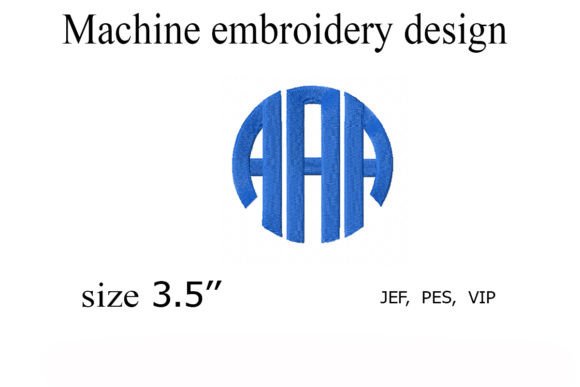
Upon loading the embroidery file into my software, the first thing I noticed was the clean geometry of the circular frame. In monogramming, the circle is a classic shape, but it is also unforgiving. Any digitizing error in the curve becomes immediately visible as a wobble or gap. The Circle Monogram maintains a smooth, consistent radius that suggests professional digitizing standards. The separation of left, central, and right letters is a significant advantage over pre-combined monograms. This modularity allows me to adjust spacing based on the specific width of the initials being used, ensuring the final composition feels balanced rather than cramped or stretched.
The visual mood of this design strikes a balance between traditional elegance and modern minimalism. It lacks excessive ornamentation, which makes it an excellent canvas for various thread colors and fabric textures. For a designer, this neutrality is a strength. It does not compete with the garment or item it adorns; instead, it elevates the perceived value of the handmade product. Whether intended for a Back To School collection or a sophisticated wedding gift, the design adapts to the context through color and placement choices rather than relying on stylistic gimmicks.
Real-World Application: The Custom Sweatshirt Test
To truly judge this design, I moved beyond the screen and planned a real-life scenario relevant to current market trends. I selected a heavyweight cotton fleece sweatshirt, a staple for Etsy seller shops and boutique merchandise. My goal was to create a center-chest monogram that felt high-end and durable. Using the central letter flanked by smaller side letters, I arranged a three-initial monogram.
During the stitch-out, the registration between the separate letter files was precise. This is often where modular sets fail, but the Circle Monogram aligned perfectly within the hoop. On the fleece, the design required a sturdy stabilizer to prevent puckering, given the density of the circular border. The result was a crisp, raised texture that popped against the soft fabric. As a custom apparel piece, it communicated quality immediately. For a craft business owner, this level of finish is what justifies a premium price point and encourages repeat customers. The design proved itself capable of handling the loft of sweatshirt material without losing definition, a crucial test for any apparel-focused embroidery project.
Versatility Across Substrates and Products
Beyond apparel, I evaluated how the Circle Monogram translates to other popular items. Its scalability makes it a strong candidate for diverse inventory:
- Tote Bag Design: Canvas totes are a favorite for personalized gifts. The circular frame provides a contained focal point that prevents the monogram from looking lost on a large surface area.
- Baby Embroidery: When scaled down for onesies or bibs, the design retains clarity. However, users must ensure the internal letter details remain legible at smaller sizes.
- Holiday Embroidery: Changing thread colors to seasonal palettes transforms this design instantly. Gold and red threads on velvet create a luxurious ornament or stocking cuff.
- Embroidered Patch: The self-contained circular shape is ideal for patches. Adding a merrowed edge or satin border after stitching creates a professional badge suitable for uniforms or denim jackets.
- Kitchen Linens: Tea towels and aprons benefit from the design’s readability. It withstands the visual noise of woven textures better than intricate script fonts.
For those selling digital embroidery files or finished goods, this adaptability means one purchase can generate multiple SKU variations across different categories.
Critical Considerations and Fabric Limitations
No design is universal, and professional judgment requires acknowledging limitations. While the Circle Monogram is robust, certain environments demand caution. On highly textured fabrics like terry cloth or boucle, the fine details of the lettering may get swallowed. In these cases, using a water-soluble topping is non-negotiable to keep stitches visible.
Stretchy performance fabrics present another challenge. Because the design includes a defined circular border, any fabric distortion during hooping will result in an oval shape post-stitch. I recommend using adhesive spray stabilizers and avoiding excessive hoop tension for activewear. Additionally, when working with dark fabrics, verify that the design does not rely solely on white underlay that might show through if the top thread coverage is insufficient. Always check stitch density settings in your software before committing to expensive blanks.
Small hoop size constraints should also be considered. While the set allows for individual letter use, combining three full-size letters may exceed standard 4x4 hoop dimensions. Users must measure their combined layout carefully to avoid mid-design stops or resizing that alters stitch properties. If you plan to use this for commercial embroidery on caps, test the curvature first; flat-circle designs can distort on curved cap fronts unless specifically digitized for headwear.
Professional Workflow and Business Best Practices
Integrating the Circle Monogram into a professional workflow involves more than just stitching. For Etsy sellers and shop owners, presentation is key. Use the design to create accurate printable mockups that reflect true stitch texture. Customers trust listings that show realistic expectations. When photographing finished samples, ensure lighting highlights the dimensionality of the stitches, as flat photos can make embroidery look like print.
Before listing any personalized gift or product for sale, confirm your licensing rights. The product description notes the need for software to transfer files, implying digital ownership, but always verify if commercial use of the design itself or only the physical end product is permitted. Protecting your business means respecting intellectual property while maximizing your creative assets.
Finally, never skip the test stitch. Even with a high-quality design like Circle Monogram, variables in thread tension, needle age, and fabric batch can affect outcomes. Keep a sample book of stitched tests on different substrates. This reference becomes invaluable when consulting with clients or troubleshooting production issues. By treating this design asset with professional rigor, you transform a simple set of letters into a reliable revenue stream and a hallmark of your brand’s quality.